Protocol
TEM Grid Preparation for Nanoparticle Suspensions (Drop-Cast ± Negative Stain)

Abstract
Transmission Electron Microscopy (TEM) requires electron-transparent specimens mounted on support films. This protocol describes a simple, robust method to prepare TEM grids from nanoparticle suspensions or dilute colloids using drop-casting on carbon-coated grids, with optional negative staining for soft/low-contrast samples. The workflow includes (i) grid handling and surface activation (glow discharge/plasma), (ii) controlled sample deposition, (iii) gentle blotting and optional washing to reduce salts/buffers, (iv) optional staining using a suitable contrast agent, and (v) dust-free drying and storage prior to imaging. Key parameters such as sample concentration, deposition time, blotting style, and stain contact time are adjusted to avoid aggregation, thick films, coffee-ring artifacts, and contamination. The method yields reproducible grids suitable for morphology, size distribution, dispersion quality, and qualitative aggregation assessment, and can be adapted for aqueous or organic dispersions and different grid/support types.
Keywords
Introduction
TEM grid preparation aims to create a thin, clean, well-dispersed layer of sample on an electron-transparent support film. For nanoparticles, the main challenges are aggregation, too-thick deposits, residual salts, and contamination. A brief surface activation step improves wetting and helps achieve uniform particle distribution. Negative staining is useful when intrinsic contrast is low or when imaging soft materials.
Automation Workflow (1 group and 5 steps)
Setup & Grid Handling
Prepare clean workspace Wipe bench, arrange tweezers, filter paper, and grid box. Label the grid box slots for sample ID, date, and condition (unstained/stained, dilution).Select grid type Choose carbon-coated grid for general NP imaging. Choose holey/lacey carbon if you need particles suspended over holes or reduced background.Outcome: Correct support film for your imaging goal.
Load grid onto a clean surface
Place the grid shiny side down (common convention varies; keep consistent) on clean foil or a grid holder. Handle only with clean tweezers at the rim.Optional: Activate grids to improve wetting and reduce hydrocarbon contamination. Typical glow discharge: 30–60 s (use your instrument’s standard settings).
Sample Preparation
Dilute sample to imaging concentrationTarget a dilution that yields a monolayer-to-light coverage. As a practical start: prepare 3 dilutions (e.g., 1×, 10×, 100×) to ensure at least one grid is “just right.”
Deposition
Deposit sample droplet: Pipette 3–5 µL onto the grid (on the support film area). Avoid touching the grid with the pipette tip.
Let particles adsorb. Start with 60 s for many NP suspensions.
If coverage is too low: increase time or concentration.If coverage is too high: reduce time or dilute.
Touch the edge of the grid with filter paper to wick away liquid. Do not press on the film.
5. Washing and Negative Staining (Optional) (2 steps)
Washing (Optional but recommended for salty buffers)
Add 1 drop (10–20 µL) DI water onto the grid surface (or float grid briefly on a DI water drop), then blot from edge. Repeat 1–2 times if needed.
Negative Staining
Apply 3–5 µL stain (UA/PTA/ammonium molybdate). Contact time typically 10–30 s (optimize per sample).Outcome: Contrast enhancement for low-contrast specimens.
Blot stain & final dry: Blot from edge. Let grid dry in a covered dust-free container for 5–10 minutes.
Storage
Place in grid box, close lid, store with desiccant if available. Record dilution, deposition time, stain, and date.
Under a light microscope (if available) or by visual inspection: look for obvious stain crystals, broken films, or heavy contamination.
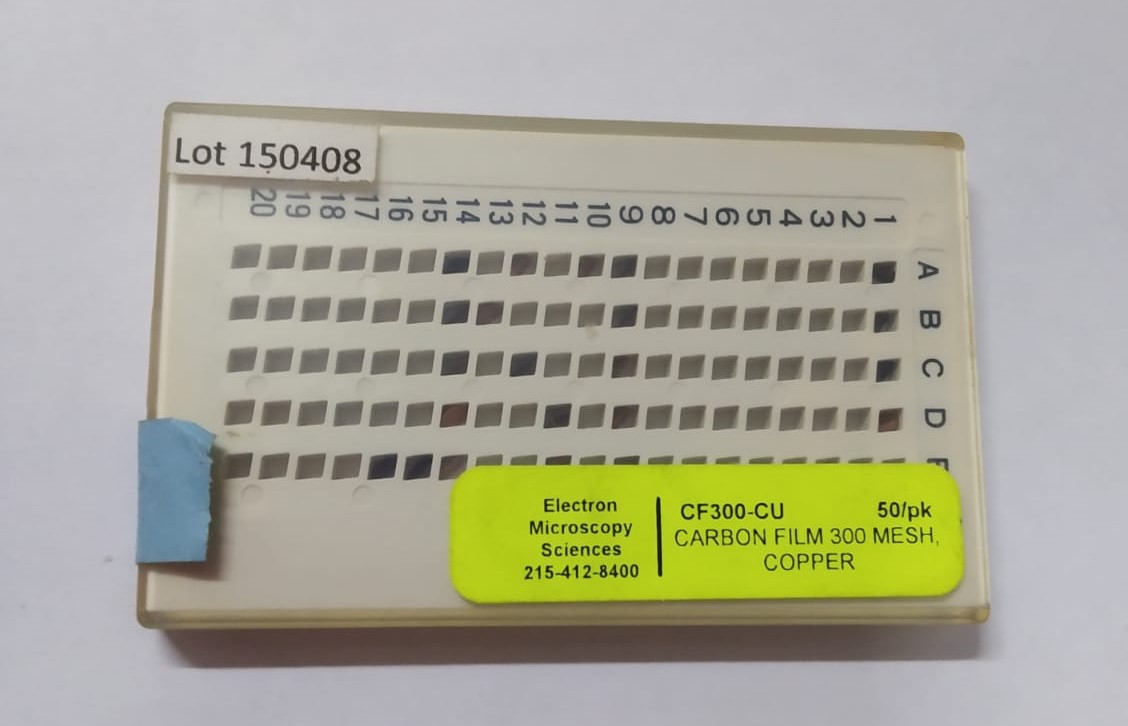
Figure 1 . Snapshot of the TEM grid box for reference purposes only
Discussion
- Too many particles / thick film: dilute sample (10×–100×), shorten adsorption time, blot more promptly.
- Too few particles: increase concentration, increase adsorption time, ensure glow discharge was effective.
- Aggregation: reduce ionic strength, mild re-dispersion, optimize pH, avoid drying too slowly, try a different support film (e.g., continuous carbon vs holey).
- Salt crystals/background: add washing steps (DI water), avoid high-salt buffers, reduce buffer concentration.
- Coffee-ring patterns: smaller droplet volume, faster blotting, controlled humidity (not too high), avoid leaving droplet too long.
- Film breaks: do not touch film with pipette; blot only from edge; handle gently with tweezers.
- Stain crystals / patchy stain: reduce stain concentration/contact time, filter stain, ensure clean grid and proper blotting.
Conclusion
This protocol provides a reproducible method for preparing TEM grids from nanoparticle suspensions using controlled drop-casting with optional washing and negative staining. By tuning dilution, adsorption time, blotting technique, and stain parameters, you can consistently achieve clean, thin, well-dispersed deposits suitable for TEM imaging and particle morphology/size analysis.
Conflict of Interest
The Author declare no conflict of interest